
Marketers have talked about “the funnel” for years. The truth is, though, candidates don’t see your funnel. Nobody has ever opened an interview by saying, “So, about my journey through your mid-funnel nurture stage.” The funnel is for us. What candidates remember is what they heard, what they saw online, and how your brand showed up when they went looking.
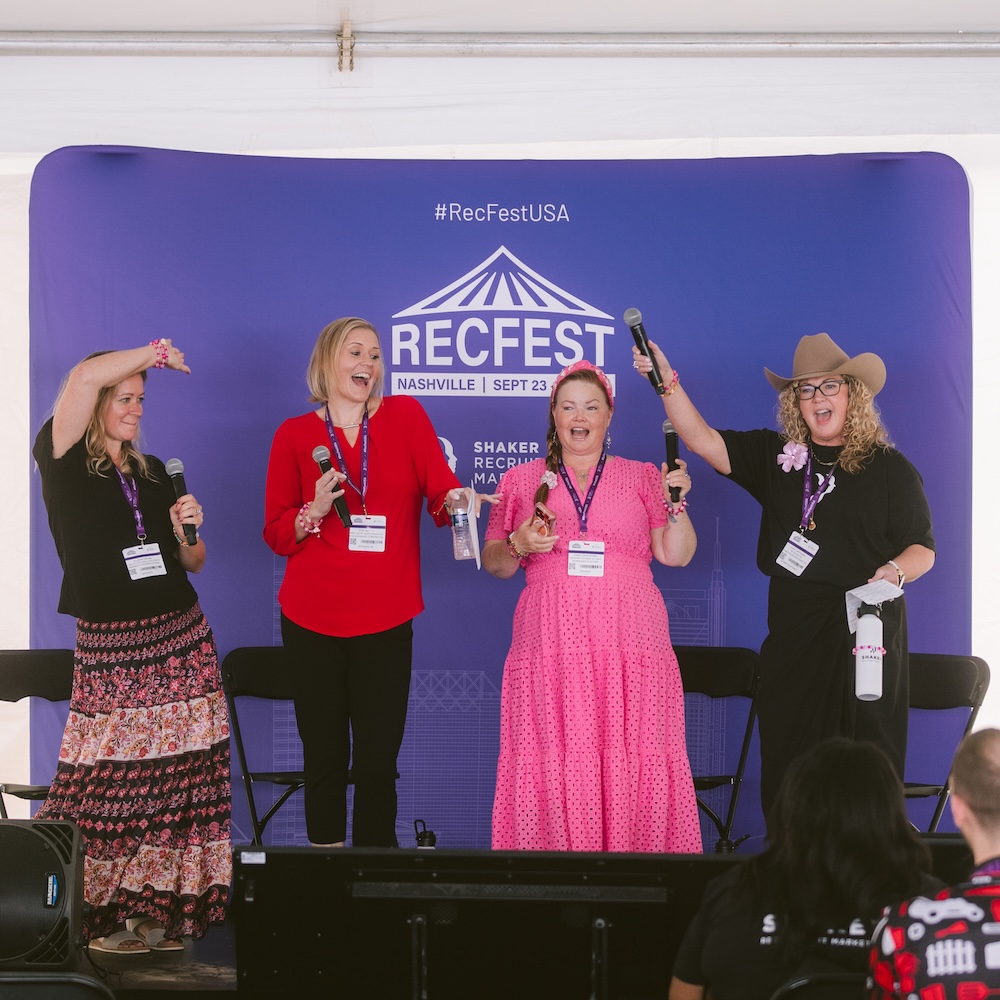
That was the premise of our panel at RecFest USA, where Shaker was the Headline Partner. Sara Hartmann, Shaker’s VP of Digital, moderated. The panelists were Tammy Embry, Stef Nikitas, and Allison Kruse. And yes, there were plenty of Dolly Parton references.
What is the 4D framework for talent attraction?
The panel used four steps to rethink the funnel from the candidate’s side:
- Define the talent segment that matters most to your business. When Schneider Electric had ten months to grow its U.S. services team from roughly 150 hires a year to 400, it threw out its old playbook and built a talent value proposition just for that segment.
- Discover what candidates actually need. Candidates aren’t asking for more information; they want the right information, and what motivates a warehouse candidate is not what motivates a corporate one.
- Design content that helps the wrong people opt out, too. At a med tech company, a four-minute realistic job preview showed exactly what full sterile gowning looks like. The result was fewer applicants, higher applicant quality, and far less early attrition.
- Demonstrate success with the right data. Define your finish line before you redesign anything. And don’t underrate real feedback from candidates, recruiters, and hiring managers, which no ATS report or LLM can give you.
Key findings from the panel
- Talking guides work. After one team gave hiring managers role-specific talking points, new-hire satisfaction with how well they were explained the role rose 18%.
- Better targeting cuts costs. Spending in the right areas allows you to cut costs elsewhere. Those are numbers that compel leadership buy-in.
- AI search is the new SEO battleground. In one quick audit of AI answers about culinary roles, half the citations came from a job board, not the employer’s own career site or blog. The panel’s advice is to audit how your brand shows up in Google’s AI Mode, ChatGPT, and other LLMs. Then close the gaps with conversational, FAQ-style content that matches how candidates now search, in full sentences and whole paragraphs.
- Transparency is table stakes. Pay, hours, location, and a real look at a “day in the life” of the job. When review sites tell a different story than your career site, give hiring managers honest answers instead of PR scripts.
- Your EVP isn’t a shelf decoration. Audit your career site and job descriptions for recurring themes, check them against what employees actually experience, and keep refining.
Watch the full panel above.
Let's connect
Success is in reach. Let's unlock it together.
Get in touch with us, and take the first step towards recruitment marketing that truly resonates, achieves your goals, and exceeds your expectations.