
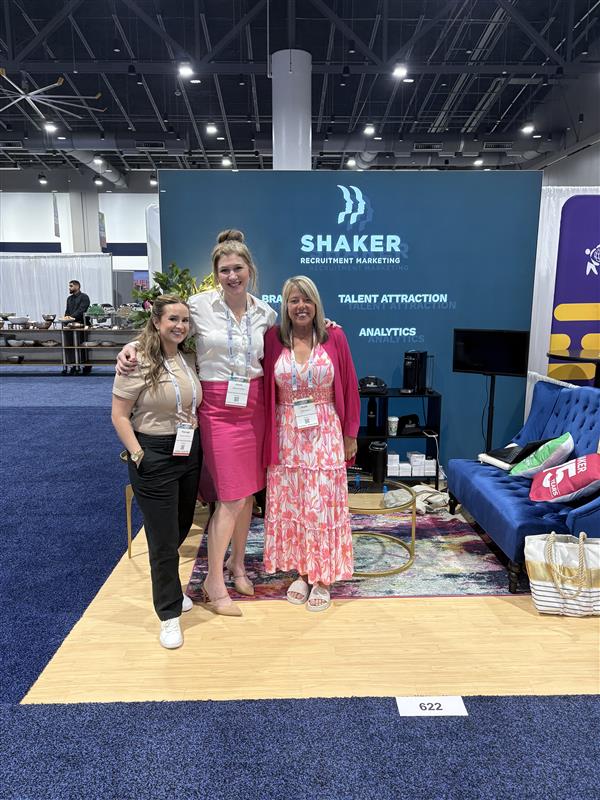
At a time when conversations about AI and automation dominate almost every talent discussion, speakers and attendees at ASHHRA consistently came back to the same core idea: beyond the latest tools, what’s working in healthcare recruitment and retention is stronger human connection.
From frontline engagement to leadership accountability, the most effective strategies shared were about deepening trust, consistency, and community.
Human connection is the strategy
Despite every advance in technology and automation, the central theme at ASHHRA was clear: the organizations making the biggest impact in healthcare recruitment and retention are the ones doubling down on human connection.
Compassion, community partnerships, and authentic frontline engagement aren’t nice-to-have; they’re differentiators. Sessions consistently returned to the idea that meaningful interactions between candidates, employees, and leaders are what move the needle on both hiring and retention.
Frontline engagement and leadership accountability are integral to retention
It sounds simple, but the data ASHHRA attendees shared was striking: intentional stay conversations and visible leadership accountability are directly correlated with lower turnover and higher workforce stability.
The organizations seeing results aren’t relying on one-time initiatives; they’re building habits and cultures where leaders are consistently present and accountable to the people they manage.
Gen Z is reshaping what accountability looks like
Gen Z’s expectations are redefining the employee experience in healthcare, and not necessarily in the ways people assume. This generation isn’t asking for less accountability; they’re asking for more of it from leadership. They want to see promises kept, values lived out, and managers who follow through.
For TA leaders, this has real implications for how you attract and retain early-career talent: the employer brand you put into the world needs to match the experience people have on day one.
Talent strategies should reflect the communities you serve
Healthcare organizations are increasingly building their pipelines around the communities they operate in, intentionally matching talent strategies to local demographics, investing in inclusive hiring, and identifying homegrown talent pathways. Programs like EMT-to-RN pipelines and gig staffing models are emerging as creative solutions to workforce shortages, and they’re working because they’re built around the realities of the communities that hospitals serve, not just the needs of the org chart.
Data-driven workforce planning is essential
From department stability indexes to predictive modeling for attrition, healthcare HR leaders at ASHHRA are using data in increasingly sophisticated ways to get ahead of workforce challenges before they become crises. The organizations winning on retention are focused on planning. If you’re not yet using data to model workforce stability and inform your talent strategy, this could be your moment to start.
The throughline is simple: what works hasn’t changed
The throughline at ASHHRA wasn’t surprising. It was reassuring. In an industry that’s been through more disruption than most, the leaders in that room were clear-eyed about what actually works: invest in people, hold leadership accountable, and build strategies grounded in the communities you serve.
Less hype. More signal. Sounds about right to us.
Interested in how Shaker approaches recruitment marketing for healthcare?
Let's connect
Success is in reach. Let's unlock it together.
Get in touch with us, and take the first step towards recruitment marketing that truly resonates, achieves your goals, and exceeds your expectations.